TRAVEL SMARTER · Updated October 13, 2026 · U.S. FAA rules
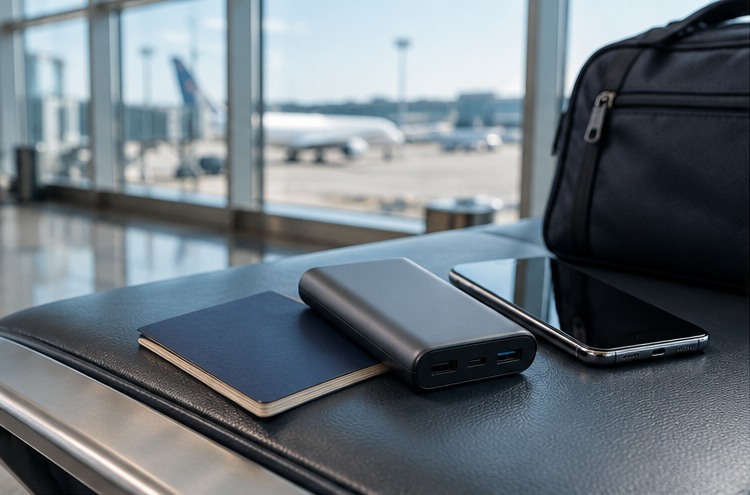
A portable charger is one of those things you don’t think about until your phone hits 9% at the airport. Then it’s suddenly the most important thing in your bag.
But here’s where people get tripped up: a power bank isn’t treated like an ordinary phone accessory when you fly. It’s a spare lithium battery—and that changes where you can pack it.
The short version? Carry it on. Don’t check it.
The capacity on the label matters too. Before you buy a new one or head for the airport, here’s what actually deserves a quick check.
1. Carry-on bag: yes. Checked suitcase: no.
Under U.S. FAA passenger guidance, power banks and other spare lithium-ion batteries belong in carry-on baggage only. They cannot go in checked luggage.
And yes, that includes the suitcase you thought was going in the cabin but suddenly gets gate-checked.
If airline staff gate-check your bag, take the power bank out first and keep it with you. A pouch you can reach without unpacking everything is a much better idea than burying it at the bottom.
2. The number to look for isn’t always mAh.
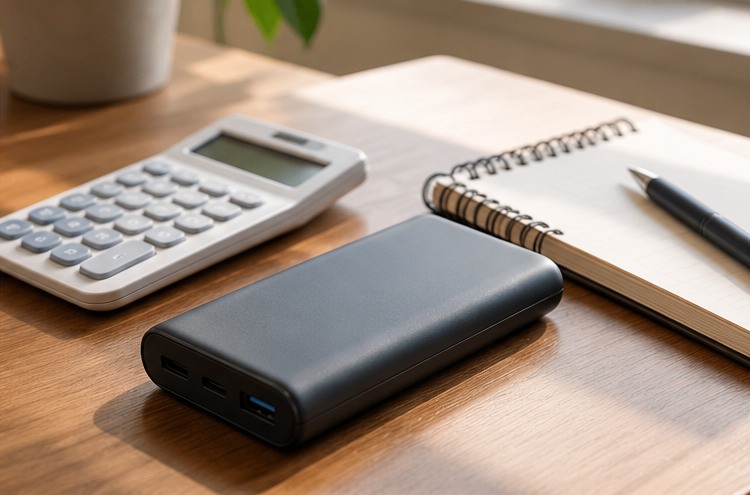
A power bank might say 10,000 or 20,000 mAh in huge letters. That’s useful for shopping, but flight limits are expressed in watt-hours (Wh).
mAh is the headline. Wh is the number to check before you fly.
If your product doesn’t clearly show Wh, the calculation is Wh = (mAh ÷ 1,000) × rated battery voltage (V). Use the battery’s rated voltage from the actual label—not automatically the USB output voltage.
- 10,000 mAh at an illustrative 3.7 V = 37 Wh
- 20,000 mAh at 3.7 V = 74 Wh
- 30,000 mAh at 3.7 V = 111 Wh — falls into the larger-battery category, requiring airline approval under the general FAA rule
According to the FAA, 0–100 Wh is generally allowed for personal-use spare lithium-ion batteries; 101–160 Wh requires airline approval and is limited to two larger spares per person. Batteries over 160 Wh are prohibited on passenger aircraft.
Important: Those mAh examples assume a 3.7 V cell rating. Real products may use different configurations. The device label and your operating airline’s current rules take priority. Airlines and international routes may be stricter.
3. Five checks before leaving for the airport
Nobody wants to be doing battery math in a security line. Run through this at home instead.
- Is the power bank undamaged—no swelling, punctures, unusual heat or recall?
- Is its Wh rating legible and within your airline’s limits?
- Is it in your carry-on, not your checked suitcase?
- Are exposed terminals and connectors protected from short circuits?
- Did you read the airline’s latest rules for quantity, storage and in-flight use?
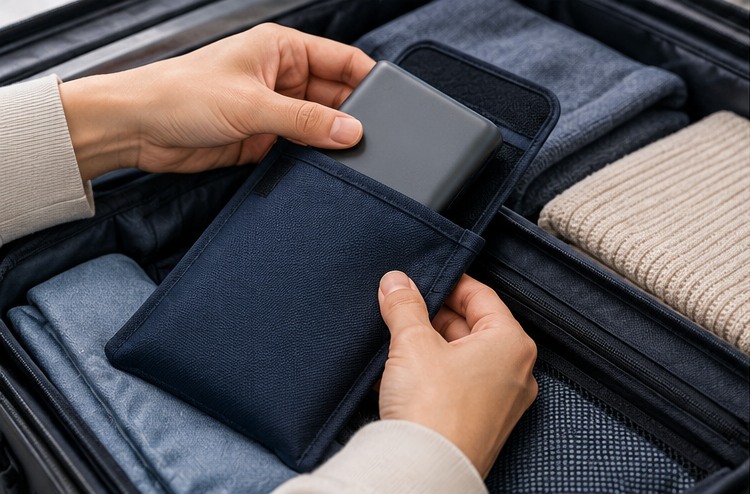
A fancy-looking battery isn’t automatically flight-friendly. If you’re buying one for travel, a clear Wh label and a manufacturer you can identify are more useful than an enormous capacity claim.
4. What if the battery gets hot on the plane?
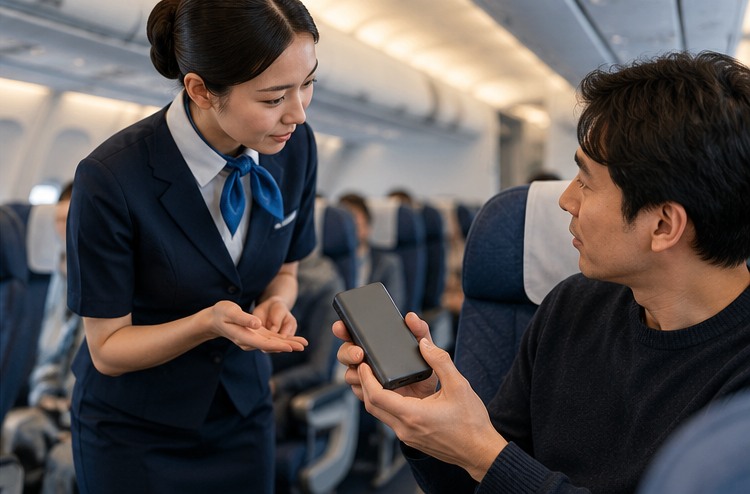
Tell the cabin crew immediately. Don’t try to quietly deal with a smoking or swelling battery yourself.
Cabin crews are trained for battery incidents. Follow their instructions. Don’t bring a visibly damaged or recalled battery likely to overheat in the first place.
Bottom line: pack smarter, not bigger.
For a typical U.S. flight, a clearly labeled power bank under 100 Wh in your carry-on is a sensible starting point.
But that isn’t a universal guarantee. Always check the operating airline and the countries on your itinerary—especially if you’re using multiple airlines.
One last thing: if the label is unreadable or the pack looks damaged, don’t gamble on getting it through the airport.
Official sources
- FAA — Airline Passengers and Batteries (updated August 10, 2026)
- FAA — PackSafe: Lithium Batteries (official supplemental guidance)
- FAA — PackSafe Resources for Passengers
Editorial note: U.S. FAA guidance summarized as of October 13, 2026. This isn’t airline approval or advice for every international route. Images are original AI-generated editorial illustrations, not photos of real incidents or tested products. No sponsored products or affiliate links.

