AI-generated photorealistic illustration · Created by Sellect Daily (AI); not an event photo.
You’ve found Leo on a sky chart. Excellent. Now comes the slightly surprising part: you don’t have to keep your eyes glued to it while waiting for a Leonid.
Leo gives the name, not a tiny viewing box
Take in a broad stretch of sky instead. NASA explains that Leonids can appear across the sky, and looking away from their apparent starting point can make their trails look longer. For 2026, NASA’s November guide recommends the early mornings of November 17 and 18, after moonset.
The shower’s radiant is in the constellation Leo—the direction the trails appear to come from. A radiant helps identify a shower; it isn’t a little window that every meteor must stay inside.
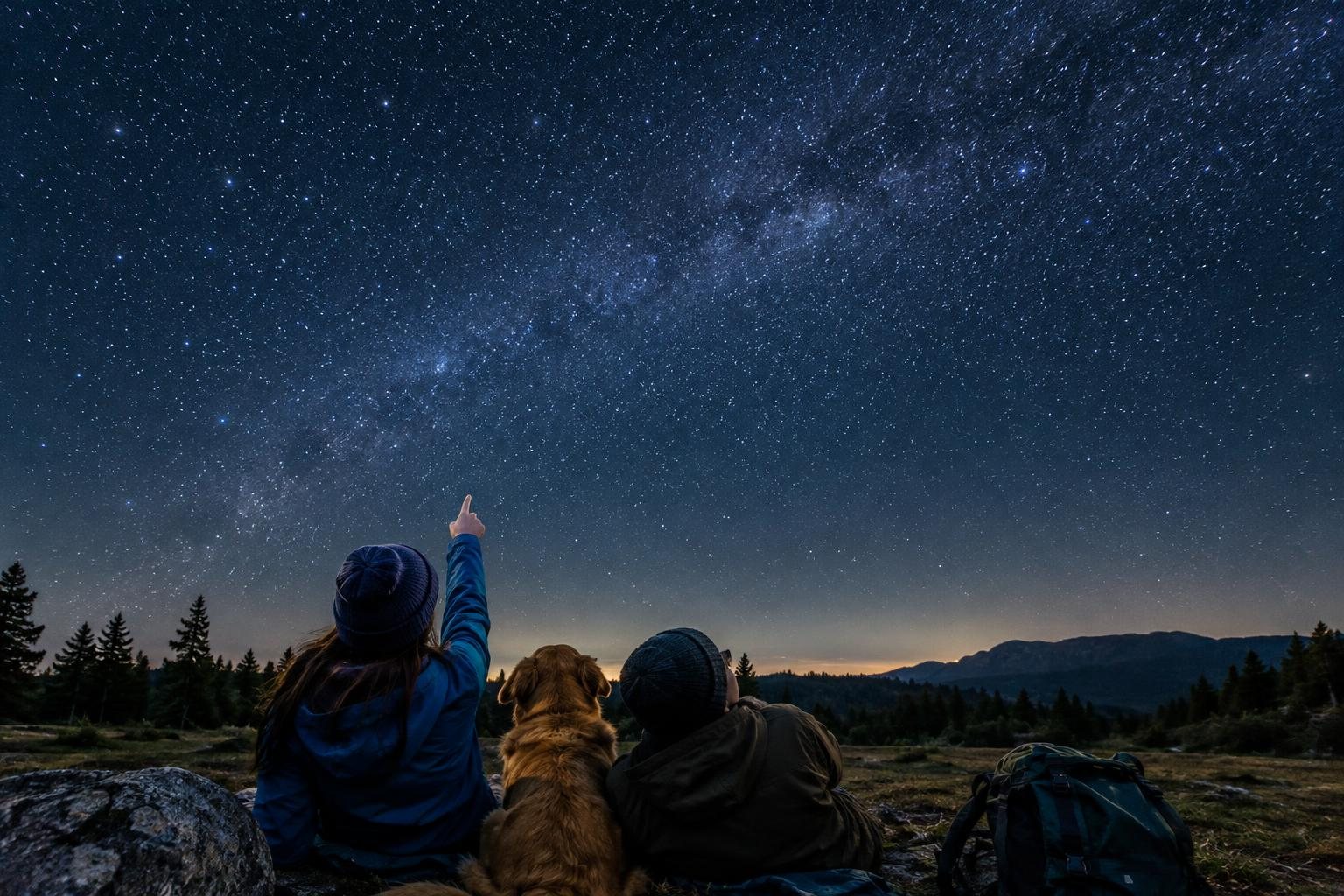
NASA’s Leonid guide recommends lying back with your feet toward the east and looking upward across as much sky as possible. That sounds less like aiming at one star and more like finding a comfortable place for your eyes to wander. A lawn chair has a respectable astronomy job.
A longer streak is a matter of perspective
Looking directly toward the radiant makes the trails appear shorter. NASA calls this foreshortening: the apparent length changes with your viewing direction, rather than every meteor suddenly taking a shorter trip.
Here’s an everyday comparison, not a meteor measurement. Imagine looking at a pencil end-on, then turning it sideways. Its length hasn’t changed, but the amount of that length spread across your view has. That’s a way to picture why apparent trail length and actual travel aren’t the same thing.

The radiant identifies the shower. It doesn’t fence in your view.
In our fictional planning scene, Tori holds a wide viewing frame while Berry points out Leo. Gureumi reaches for a tiny frame that fits just the constellation. Tori gently slides the wider frame back into place. The sky didn’t apply for a passport photo.
The pencil comparison explains apparent length. It isn’t a scale model, a test result, or a claim that every trail will look long.

Berry has located Leo. The rest of the sky can stay in the picture.
Put the morning on the correct calendar date
NASA’s November guide names the early mornings of November 17 and 18 as viewing opportunities after the Moon sets. Those are recommendations for watching, not a promise of a meteor at a particular minute. The local moonset, dawn and cloud conditions still matter.
For a simple planning example, choose the morning of November 17 in your own time zone. If you’re preparing the previous evening, write November 16 on the preparation note and November 17 on the before-dawn outing. Midnight changes the date even when it still feels like the same long night.

Add a local moonset check and dawn check beside that morning, then choose a dark place you can legally and safely use. This example doesn’t supply a made-up moonset time for every city. A date on a national guide is the beginning of your plan, not your local alarm setting.
Allow about half an hour for your eyes to adjust in the dark, as NASA recommends, and leave yourself time to watch afterward. The adjustment period isn’t a countdown to a guaranteed sighting.

Gureumi leaves room beside the date for local conditions. A useful little blank.
Checked November 5, 2026: NASA’s November skywatching guide, published November 2 and updated November 3, supplies the 2026 viewing recommendation. Its general Leonid guide supplies the viewing-direction and perspective explanation. November guide · Leonid viewing guide.
Find Leo if you’d like to get oriented, then let your attention spread beyond it. Pick the local morning, check the conditions, and settle into the wider view. The constellation can keep its naming rights without keeping all your attention.