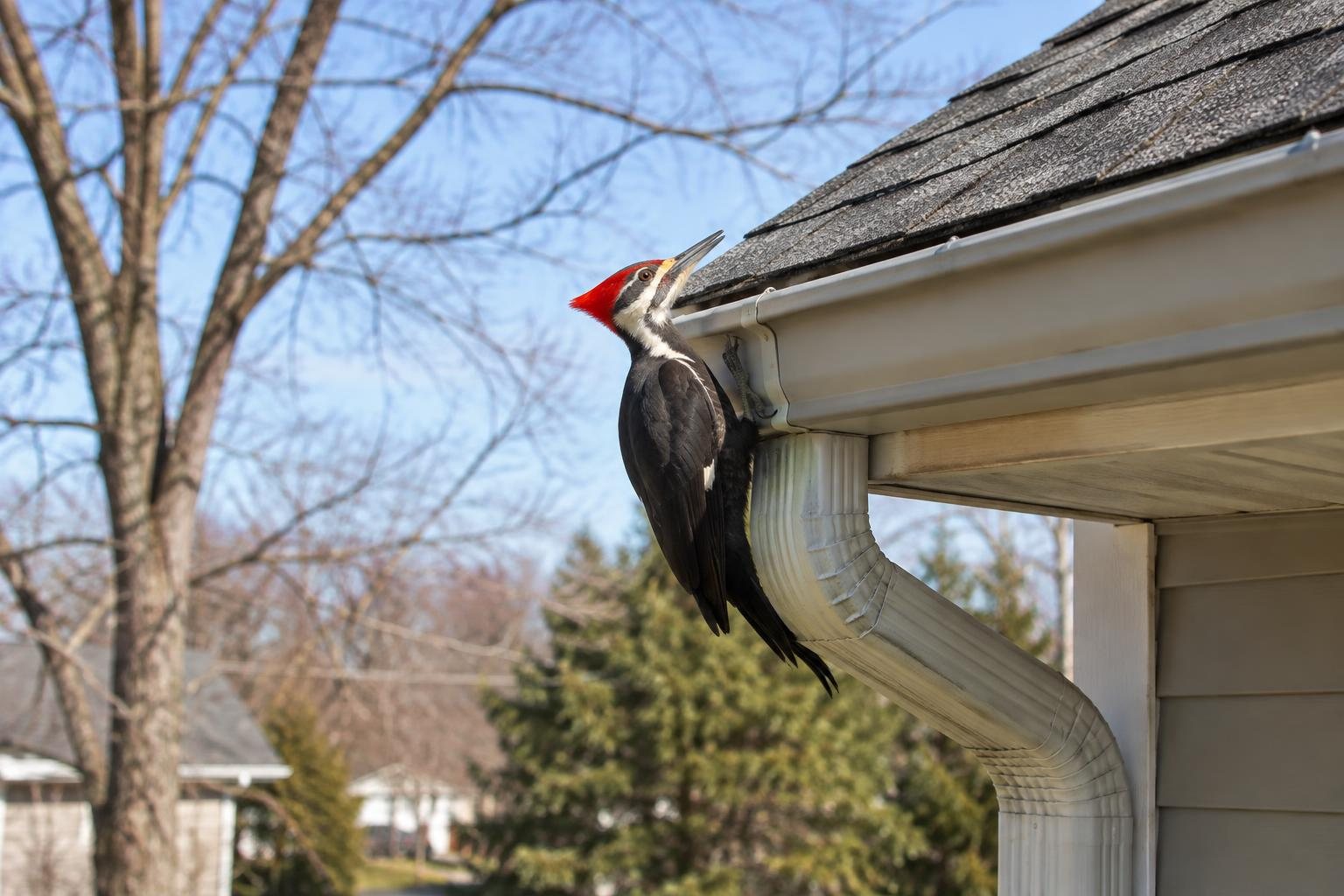
AI-generated photorealistic illustration · Created by Sellect Daily (AI); not an event photo.
Why would a woodpecker choose a metal gutter at sunrise? A fast, rolling burst on metal is usually a message, not a breakfast search: the bird has found a wonderfully loud drum.
Cornell Lab says drumming advertises territory and helps attract mates. Metal simply carries the announcement farther—one small bird, one surprisingly ambitious sound system.
Is it drumming or looking for food?
Listen to the rhythm. Drumming is fast, extended, and conspicuously loud. Feeding pecks are slower and quieter because the bird pauses to choose each strike.
Cornell notes that streetlights, gutters, and even garbage-can lids work well because they amplify sound. On a tree, a woodpecker may shift only slightly until it finds the spot with the best resonance.
The gutter isn’t a confused dinner plate.
It’s the neighborhood megaphone.

Do the marks tell a different story?
They can. A rapid performance on metal may leave little or no damage. Small irregular holes in siding can point to insects, while a larger smooth cavity can mean a bird is exploring a nest or roost site.
The U.S. Fish and Wildlife Service recommends checking for insects and rotting wood when a bird keeps working on siding. Fixing the underlying house problem may solve more than the noise.
A quick look before you act
- Fast, even burst on metal: likely communication.
- Small, irregular holes: inspect for insects or damaged wood.
- Large, smooth cavity: check for nesting activity before sealing anything.
Will the concert stop on its own?
Woodpeckers can drum year-round, though Cornell reports a noticeable spring increase—roughly March through June, depending on latitude. Research around Ithaca also found metal fixtures were popular drums and that drumming was often more annoying than damaging.

That means a few mornings of noise don’t automatically signal a structural emergency. Watch the surface and the bird’s pattern before deciding what problem you actually have.
First identify the sound.
Then decide whether the house needs help.
What’s the bird-friendly next step?
Don’t harm or trap the bird. U.S. native woodpeckers, their nests, and eggs are generally protected under federal law. An active nest changes what you can safely and legally do.

For real damage, start early with nonlethal exclusion and local wildlife guidance. The Fish and Wildlife Service calls taut, maintained bird netting one of the most effective options and warns against sticky gels that can injure birds.
For noise alone, observe first. Tomorrow morning, notice whether the beat is a quick metallic roll or slower stop-and-start pecking—the rhythm may answer the question before the coffee does.
Sources
- Cornell Lab of Ornithology: How to Recognize Woodpeckers by Their Drumming Sounds (April 3, 2025)
- U.S. Fish & Wildlife Service: Woodpeckers and Your Home (checked October 23, 2026)
- Harding, Vehrencamp & Curtis: External Characteristics of Houses Prone to Woodpecker Damage (Human–Wildlife Conflicts, 2009)