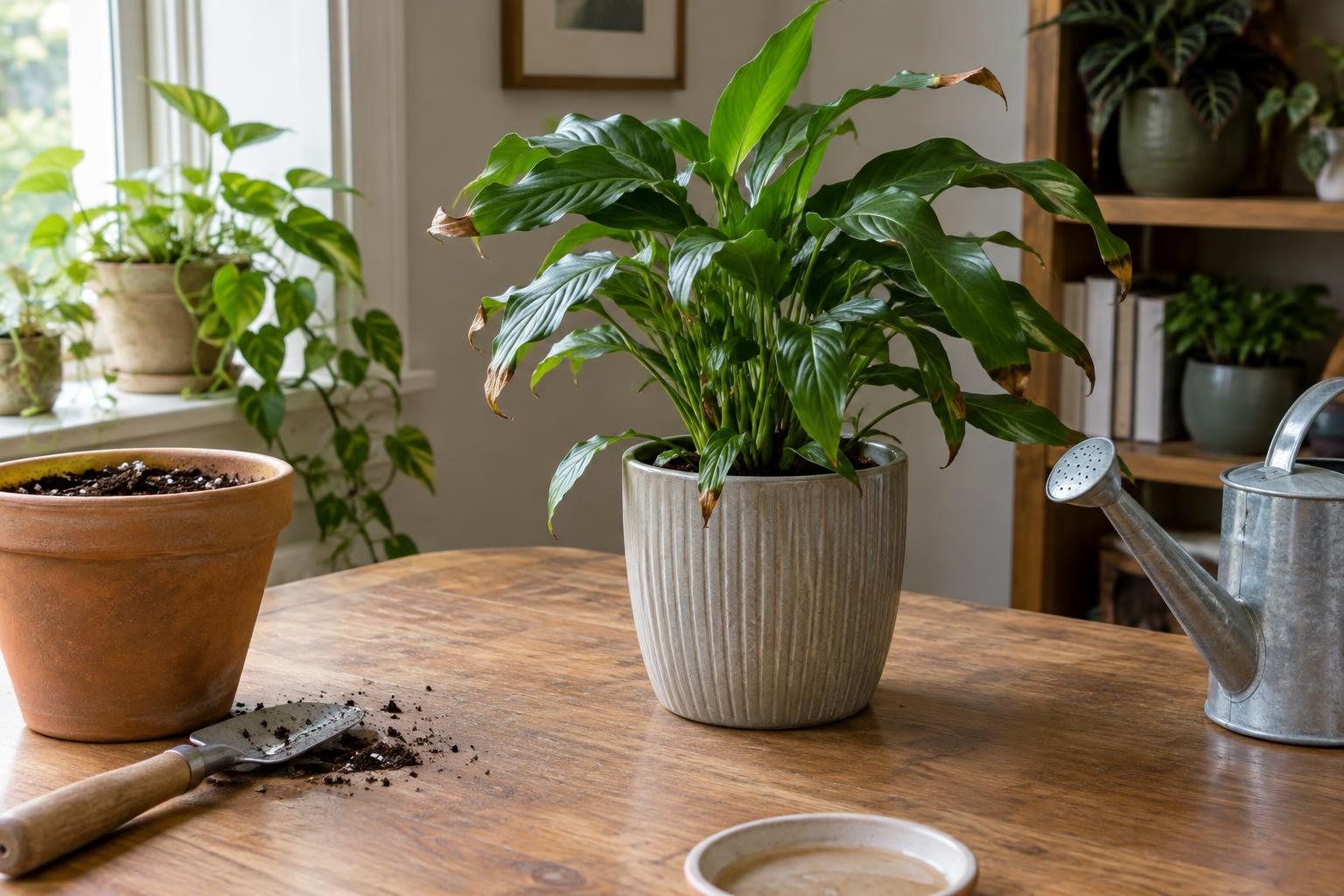
AI-generated photorealistic illustration · Created by Sellect Daily (AI); not an event photo.
Do brown leaf tips mean your houseplant needs water right now? Not necessarily. Check the top inch of potting mix, recent fertilizer, and room humidity before reaching for the watering can.
The same crispy edge can come from several causes. A quick three-part check is more useful than adding water on autopilot.
Is the potting mix actually dry?
Push a finger about an inch into the mix. If it still feels damp, wait; watering again can leave roots sitting in airless, wet soil.
If that top layer feels dry and the plant needs water, soak the mix until water reaches the drain hole. Empty the saucer after 30 to 45 minutes so the pot isn’t quietly taking a bath all afternoon.
A brown tip is a clue, not a watering schedule.
Let the soil answer first.

Could the room air be the dry part?
Low humidity is a common cause of brown tips, especially for tropical plants near heating vents in winter. Misting changes humidity only briefly and can help spread some plant diseases.
A humidifier, a group of plants, or a pebble tray works more steadily. Keep the pot above the tray’s waterline; roots should get humidity, not a surprise swim.
The two-minute check
- Feel the top inch of potting mix.
- Look for standing water in the saucer.
- Notice heating vents and very dry room air.
When do fertilizer and water quality matter?
Too much fertilizer can leave salts in the potting mix and damage leaf edges. Feed modestly, never exceed the label, and flush the mix with plain water only if the pot drains freely.

Most municipal water is fine for most houseplants. Softened water can add salts, while spider plants, dracaena, prayer plants, and calathea can be more sensitive to fluoride or chlorine.
Change one thing at a time.
New growth will show whether it helped.
Should you trim the brown tips?
You can trim dead tips for appearance, but the cut won’t fix the cause. The useful signal is what happens next: healthy new leaves suggest the growing conditions are improving.

If browning keeps spreading, or the soil smells sour and stays wet, inspect the drainage and roots rather than adding more water. Several clues together tell a better story than one leaf edge.
Today, note the soil feel, the last feeding, and the plant’s distance from a vent. That tiny record makes the next brown tip much easier to read.
Sources
- Iowa State University Extension: Why Does My Houseplant Have Brown Leaf Tips and Edges? (updated February 3, 2026)
- Iowa State University Extension: How to Care for Houseplants (checked October 23, 2026)
- University of Minnesota Extension: Winter Houseplant Tips (February 2, 2026)